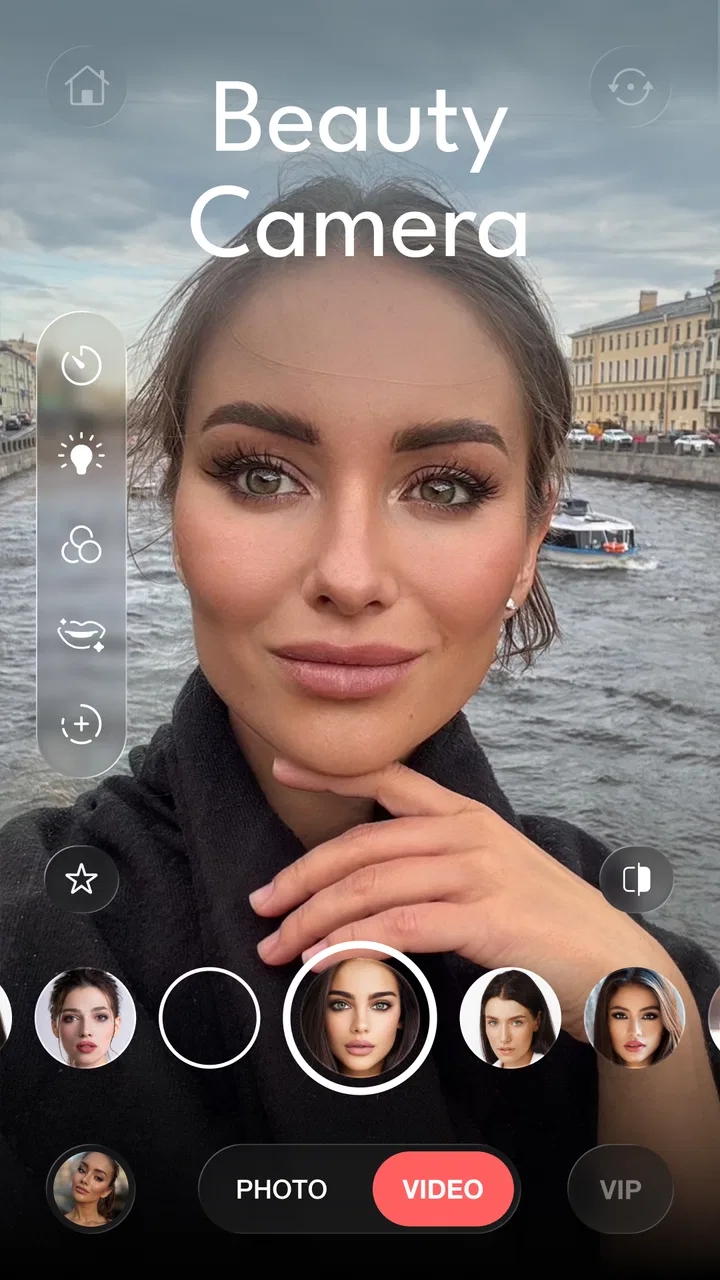
Persona: AI Beauty Editor
- 4.7
- Rating
- 10.00M
- Installs
- Free
- Price

 Analysis by App-foxy
I tried Persona: AI Beauty Editor as a photography app rather than treating it like a full replacement for a professional retouching suite. That distinction matters. Its appeal is the promise of making portraits look more polished with less manual work, while still keeping the process approachable for someone who does not want to spend an evening adjusting masks, curves, and layers.
The app is free to install and is made by TICKET TO THE MOON, INC. It is aimed at an Everyone audience, runs on devices using iOS 10 or later, and has reached over ten million installs. Its 4.7 average from around eighty-eight thousand ratings suggests that the quick beauty-editing approach works for a large audience, although popularity alone does not tell you whether it suits your preferred editing style.
How Persona feels when the connection becomes part of the workflow
My first impression is that Persona is best understood as a fast portrait-finishing tool. You begin with a photo, apply the kind of improvements people commonly want for selfies and casual portraits, and judge the result visually rather than building an elaborate edit from scratch. That makes it especially comfortable for social posts, profile pictures, family snapshots, and quick before-and-after experiments.
You May Also Like

 Blood Strike: 2.5 Anniversary
Blood Strike’s Loadouts Turn Every Drop Into a Tactical Gamble
A close look at Blood Strike’s custom loadouts: how fast access to signature weapons reshapes its battle royale rhythm, rewards preparation, and narrows the gap between fights.

 Pandora - Music & Podcasts
Pandora’s Music Is Easy to Start, but Harder to Recover
Pandora’s strength is its low-effort path from a seed to a station. Its weak spot is how much confidence it asks you to place in connection, setup, and quiet recovery.

 8 Ball Pool
 Is Built on Rivalries, Rematches, and Routine
A close look at the rivalries, rematches, shared routines, and unanswered safety questions that turn a quick pool match into a persistent mobile community.

 Samsung Music
’s Quiet Strength Is Playing What You Already Own
Its reach comes less from spectacle than from dependable access to a personal library. That simplicity is both the app’s strongest retention engine and its ceiling.

 AccuWeather: Weather Radar
AccuWeather Review: A Quick, Clear Forecast for Everyday Decisions
For everyday plans, the best forecast is the one you can understand quickly. AccuWeather makes rain timing, radar, and local conditions easy to act on, with a few trade-offs.

 Hill Climb Racing
Why Hill Climb Racing Still Turns Crashes Into One More Run
A tiny car, a bumpy hill and one more upgrade: Hill Climb Racing keeps resurfacing because its simple chaos makes every near-miss feel personal.
More From Our News Desk



The important practical detail is that an AI-focused editor can make connectivity noticeable. A photo editor with purely local adjustments usually feels predictable: open an image, move a slider, and see the result immediately. With Persona, the experience can feel more dependent on what is happening behind the scenes. I would therefore use it when I have a stable connection available, especially if I am editing several portraits or trying more demanding effects.
I would not plan an important editing session around an uncertain signal. On a train, in a crowded venue, or in a building with patchy reception, the frustrating part is not necessarily the edit itself; it is the interruption between choosing a photo, processing it, and reaching the final result. If you are expecting the same instant response as a basic crop-and-brightness tool, that difference can change your opinion of the app quickly.
For a normal home workflow, this is easy to manage. I can select a portrait, make a restrained adjustment, inspect the face at full size, and decide whether the result still looks like me. The app becomes less attractive when I need a long sequence of precise edits with no pauses, because a connection-sensitive process can turn a simple creative task into repeated waiting.
What works well for everyday portrait editing
The strongest use case is a photo that is already reasonably good but needs a little help before sharing. Think of a quick selfie taken near a window, a group picture where one person looks tired, or a profile image that needs a cleaner, more finished appearance. Persona is useful in these situations because it focuses attention on the face instead of asking me to understand a complete professional retouching workflow.
I found it helpful to begin with the smallest correction that makes the image feel more balanced. AI beauty tools can be tempting because the preview may look immediately smoother or brighter, but a dramatic change can flatten natural texture and make the subject look disconnected from the lighting in the original photo. My practical rule is to reduce the intensity after the first pass, then compare the edited version with the original before saving.
That comparison step is more important than it sounds. A portrait can look attractive on a small phone screen while appearing artificial when viewed larger. I also check areas around the hairline, eyes, lips, and jaw, because those are the places where an aggressive automated adjustment is most likely to become obvious. This is one of the app’s trade-offs: speed is valuable, but speed makes it easy to accept an edit before examining its edges.
Another useful workflow is to keep the original photo untouched and treat Persona as a finishing stage. I would not make it the only copy of an image. Instead, I choose a duplicate or rely on the original remaining in my photo library, then export the version I actually like. That gives me freedom to try a stronger look without losing the natural starting point.
Using it in real mobile situations
Persona makes the most sense on a phone because the situations it serves are mobile by nature. I can imagine using it after taking a quick portrait at a birthday dinner, before updating a messaging profile, or while preparing a social post during a short break. The interface is more approachable for those moments than a desktop editor that expects a desk, a large display, and uninterrupted concentration.
There is also a useful distinction between editing for private sharing and editing for a public profile. For a family group or a temporary post, I might accept a slightly more noticeable enhancement. For a professional profile or a photo that will stay online for a long time, I would be much more conservative. The app can help with presentation, but it cannot replace good lighting, a natural expression, or a well-composed image.
On a small screen, I recommend rotating through three checks: the full portrait, a close look at facial details, and the image at the size where other people will actually see it. Each view reveals something different. The full view tells me whether the face still belongs in the scene; the close view exposes over-smoothing; the normal viewing size tells me whether the edit is worth keeping at all.
Storage and battery are also part of the mobile experience, even when they are not the main selling point. A person editing many versions of the same photograph can quickly create clutter. I would save only the final choice and remove failed experiments later. That simple habit makes the app easier to live with than endlessly exporting every variation.
Where the usual alternatives still have an advantage
Compared with a traditional photo editor, Persona is more inviting when the goal is beauty-focused portrait work rather than general image correction. A conventional editor usually gives me more control over exposure, color, cropping, perspective, and local selections. That control is valuable when the problem is a dark background, a distracting object, or uneven lighting across the whole frame.
On the other hand, a manual editor demands more decisions. If I only want a portrait to look a little more polished, opening a complex tool can feel like using a workshop to tighten a loose button. Persona’s focused approach is better for speed and accessibility, particularly for people who do not enjoy technical editing.
Dedicated camera apps are also better when the main problem is capture rather than retouching. They can help me think about framing and exposure before I take the picture. Persona comes afterward. It can improve a usable portrait, but it cannot rescue every image, and it cannot recreate the advantages of soft light or a steady camera.
For users who want a highly controlled, editorial finish, I would choose a more manual workflow. That is not a criticism of Persona; it is a question of priorities. The app is strongest when I want a quick result and am willing to accept automated decisions. It is weaker when I need exact control over each part of a face or a consistent look across a large professional set.
What happens when processing does not go smoothly
Connectivity becomes most visible when something fails. A weak signal may turn a simple action into a delay, while a temporary interruption can leave me unsure whether I should tap again, wait, or reopen the image. Repeating an action too quickly is not always helpful, because it can create confusion about which version is being processed or saved.
My recovery routine would be deliberately simple. I stop tapping, check whether the connection is stable, and return to the selected photo rather than making several new edits at once. If the result appears incomplete, I compare it with the original and start the adjustment again. Keeping the source image available is the best protection against losing confidence in the workflow.
This is also why I would avoid beginning a large batch immediately before an appointment or a trip. Persona is well suited to one or two quick portraits, but a time-sensitive batch deserves a more predictable setup. If I need guaranteed access to a finished image at a particular moment, I would complete the work earlier and verify the saved result before leaving reliable connectivity.
A failed attempt is especially annoying when the app has already encouraged me to expect instant beauty edits. The smoother the automated experience feels when everything works, the more noticeable a pause becomes when it does not. I would describe this as a usability consideration rather than a reason to reject the app, but it should influence when and where I use it.
Being sensible with photos and network use
Portraits are personal, so I would approach any connected editing workflow with the same care I use for other photo services. I choose images deliberately, avoid sending unnecessary versions, and remove duplicates from my device after deciding which result I want. That is good digital housekeeping regardless of the editor, but it matters more when the process may involve online communication.
I also avoid editing private photographs on an open public network unless the task is unimportant. A trusted home connection or a secure mobile connection is a more comfortable choice for personal portraits. This is not about assuming a particular policy or technical design; it is simply a sensible habit whenever an app’s editing experience appears to rely on connectivity.
Data-conscious use also means being realistic about in-app spending. Persona is free to start, but individual in-app purchases range from forty-nine cents to three hundred sixty-five dollars. That is a very wide range, so I would inspect the price shown for any item before confirming it and avoid treating every visible option as part of the free experience.
The app’s current version is 1.7.57, which is useful context when troubleshooting. If the interface behaves differently after an update, I would first make sure the app and operating system are in a normal state, then retry with a single image instead of assuming the entire workflow is broken. The minimum operating system requirement is iOS 10 or later, so device compatibility is another practical point to check before relying on it.
Who should use Persona, and who should skip it?
I would recommend Persona to someone who mainly edits selfies and portraits, wants a friendly mobile workflow, and prefers an automated starting point over a long list of manual controls. It is also a good fit for people who regularly need a presentable image quickly but do not want to learn a full desktop editing program.
I would be more cautious if you dislike beautifying effects, want every adjustment to remain visibly natural, or need a dependable workflow in places with unreliable connectivity. You can still use the app conservatively, but its central appeal may not matter much to you. A standard editor may be a better match if your everyday work involves landscapes, documents, product photos, or detailed color correction.
Professional photographers should also set expectations correctly. Persona can be a convenient quick-pass tool, but I would not make it the sole stage in a carefully managed portrait pipeline. For paid work, repeatability, subtle control, and predictable file handling matter as much as speed. A manual editor remains the safer choice when a client expects a very specific finish.
For a casual user, however, the balance is different. If I have a good source image and a stable connection, the app can shorten the distance between taking a portrait and feeling comfortable sharing it. The key is to treat the automation as a suggestion, not as an unquestionable final decision.
My connectivity verdict
After using Persona as a portrait-focused photography app, I see its value in convenience rather than technical depth. It is quick to approach, easy to fit into a phone-based routine, and well suited to small improvements that would otherwise require more patience. The large audience and 4.7 average show that this style of editing resonates with many people, while the free entry point makes it easy to test personally.
Its biggest practical limitation is that the experience can feel less dependable when the network is not cooperating. I would use it at home, in a café with a trustworthy connection, or before heading somewhere I know reception may be poor. I would not depend on it as my only option during travel or immediately before an important deadline.
My recommendation is to use Persona for fast, restrained portrait finishing, not as a complete replacement for a traditional editor. Keep the original, inspect the face at more than one zoom level, check the cost of optional items, and give the app a stable connection when possible. Follow those habits and it becomes a useful everyday tool; ignore them and the speed that makes it attractive can also make its limitations more obvious.
FAQs for Persona: AI Beauty Editor
01What is Persona: AI Beauty Editor used for?
Persona: AI Beauty Editor is a photo-editing app focused on enhancing portraits and selfies with artificial intelligence. It can help refine skin appearance, adjust facial details, apply makeup-inspired effects, improve lighting, and create a more polished look. It is designed for quick edits, although the final result depends on the original photo, lighting, and the intensity of the selected tools.
02Is Persona: AI Beauty Editor free to download and use?
The app may be available to download for free, but some editing tools, filters, export options, or advanced AI features can require a subscription or in-app purchase. Before confirming a trial or payment, check the pricing page carefully, including renewal terms. Availability of free features and premium content may also vary depending on your device, region, and the current version of the app.
03Does Persona: AI Beauty Editor work on both Android and iPhone?
Persona: AI Beauty Editor is intended for mobile users, but compatibility depends on the operating system, device model, and app version. Before downloading, review the requirements listed on the official Google Play Store or Apple App Store page. Older phones may experience slower processing, limited functionality, or problems handling high-resolution images, especially when AI-based effects require additional processing power.
04Are photos uploaded to Persona: AI Beauty Editor safe and private?
Because AI editing may require image processing, users should review Persona: AI Beauty Editor’s privacy policy before importing personal photos. Pay attention to whether images are processed on the device or uploaded to remote servers, how long content is retained, and whether data may be shared with service providers. Avoid uploading sensitive images unless you understand and accept the app’s data practices.
05Can I edit photos without making them look unnatural?
Yes, the app can produce natural-looking results when enhancement controls are used moderately. Strong smoothing, reshaping, makeup, or facial adjustments may create an artificial appearance, particularly in close-up portraits. For better results, begin with subtle settings, compare the edited image with the original, and use several small adjustments instead of applying the maximum intensity of a single beauty effect.
Pros
- Easy-to-use tools for quick beauty edits
- AI effects create polished results with minimal effort
- Useful for profile pictures and social media posts
- Offers multiple editing styles and visual transformations
- Preview changes before saving the final image
Cons
- Some advanced features may require a subscription
- AI results can vary depending on photo quality
- Edits may look overly smoothed or unrealistic
- Processing can take longer on older devices
- Privacy concerns may arise when uploading personal photos

Persona: AI Beauty Editor
Gallery